
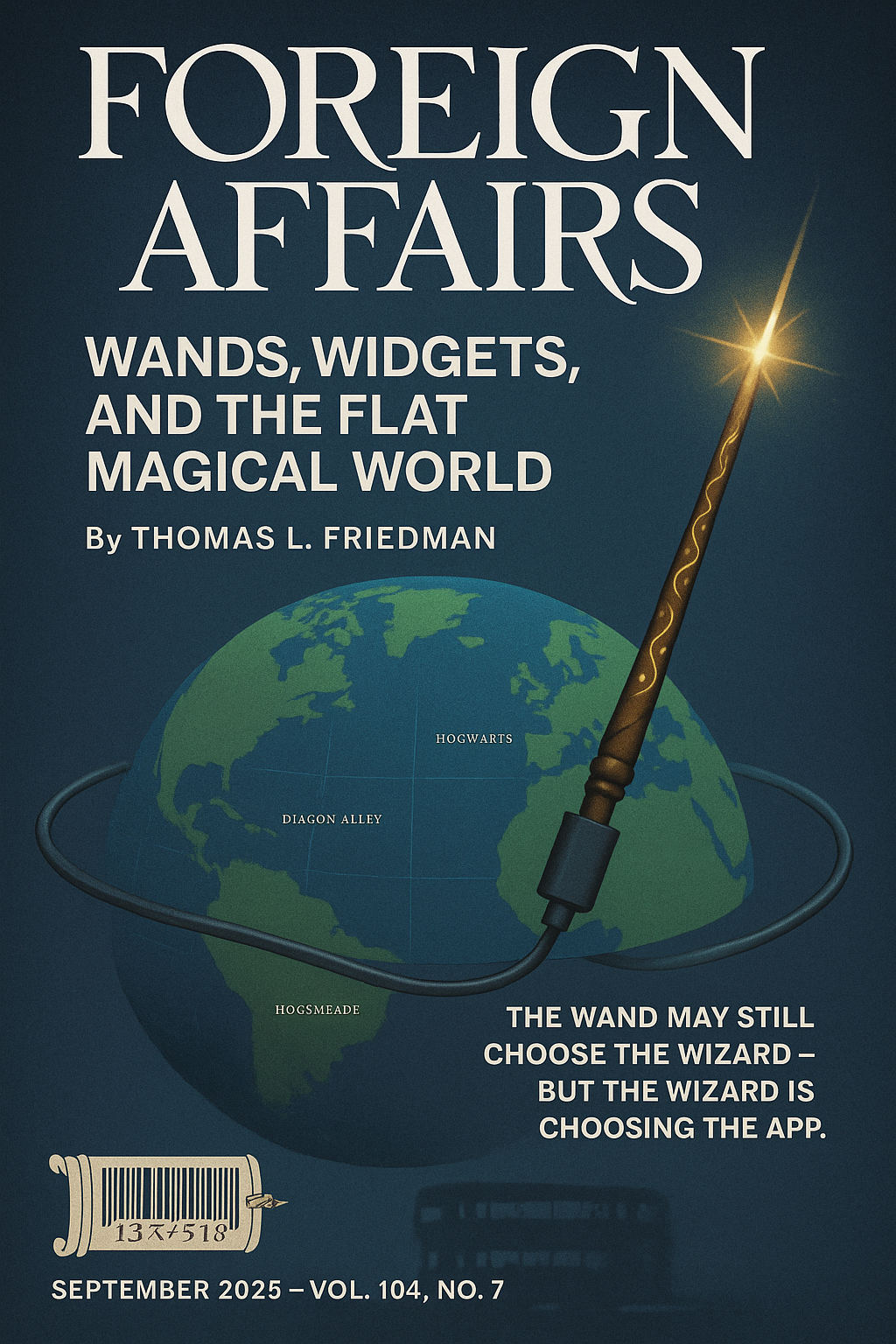
By (the LitBot in) Thomas L. Friedman (mode)
Foreign Affairs
September 2025
It’s been more than two decades since the fall of Voldemort and the liberation of Hogwarts from authoritarian darkness, but as I walked through Diagon Alley this spring with a butterbeer in hand and a Ministry of Magic escort at my side, I couldn’t help but think: “Wow, the magical world is flattening faster than you can say Expelliarmus.”
There’s a quiet revolution unfolding beyond the Leaky Cauldron. Owls are being replaced by encrypted messaging charms. The Daily Prophet is experimenting with algorithmically personalized newsprint. Startups in Hogsmeade are building wand-compatible wearables. And—get this—Gringotts just announced it’s moving half its gold reserves into a hybrid galleon-bitcoin vault.
Magical Britain isn’t just healing from the trauma of the Second Wizarding War. It’s leaping, wand-first, into the post-industrial, post-spellbook, AI-enchanted global economy.
It’s what I like to call the Great Wand Recalibration.
A Flat World, Now with Cloaks
To understand the post-Voldemort order, you have to begin where all transformations start: connectivity. For years, the wizarding world maintained strict separation from the Muggle one, governed by secrecy statutes and enforced by a cultural insularity that, frankly, kept magical society locked in a kind of artisanal feudalism. Wizards brewed potions by hand. They wrote letters. They feared fax machines.
But when Voldemort fell and the old bloodlines lost their monopoly on power, the new Ministry—led first by interim technocrats like Kingsley Shacklebolt and then by reformers like Hermione Granger—made a series of quiet but seismic policy decisions. Chief among them: the Partial Secrecy Suspension Accord of 2010, which allowed limited magical-Muggle collaboration in sectors deemed “mutually non-disruptive.” Translation? Wizards got smartphones. Muggles got magical healthcare. And the global economy got a whole new layer of complexity.
Today, a Hufflepuff healer can apparate into a Johannesburg slum and administer dragon-liver-based antivirals that outpace Moderna. Meanwhile, a fintech company in Singapore recently licensed goblin-accountancy protocols to build tamper-proof smart contracts. The magical world hasn’t just joined the globalized system. It’s re-enchanting it.
Hogwarts Meets Davos
When I moderated a panel at the World Economic Forum’s first Wizarding Pavilion in Davos—yes, that’s a thing now—the theme was clear: magic is no longer a cottage industry. It’s a scalable asset class. The CEOs in attendance weren’t just hedge fund managers and tech bros, but also wandmakers, rune coders, and transfiguration consultants. There was even a breakout session on “Unicorn Herding: Ethical Capital Strategies in Hybrid Asset Environments.” (Spoiler: the unicorns unionized.)
But the most important conversations weren’t about money. They were about identity. How does a society rooted in secrecy and hierarchy adapt to a world built on openness and flatness? What happens when a Ravenclaw startup founder in Bengaluru out-innovates a centuries-old spellwright in Wiltshire? How do you keep a Hogwarts education relevant when YouTube tutorials on levitation charms are getting 12 million views?
To answer those questions, I turned—as I always do—to cab drivers.
The Knight Bus Theory of Global Integration
One rainy night in London, I flagged down the Knight Bus, now retrofitted with hybrid engines and free WiFi (thanks, Department of Magical Transport Reform). My driver, Stan Shunpike—yes, still driving—told me he’d seen more change in the last ten years than in the hundred before. “Used to be,” he said, dodging a lamppost, “you went to Knockturn Alley to buy a cursed amulet. Now some berk in Estonia sells ‘em on Etsy.”
That, folks, is the globalization of magic. Borders are porous. Markets are instant. Reputation travels faster than a howler. In the flat magical world, you’re not just competing with the wandmaker down the lane—you’re up against a Thai necromancer on TikTok with better branding and next-day delivery.
But it’s not just competition. It’s collaboration. A trans-Pacific alliance of potion masters recently solved a centuries-old curse cycle plaguing the Philippines. Israeli and Egyptian rune experts co-developed a climate ward that’s already mitigating desertification in the Sahel. Even goblins—long the libertarians of magical finance—are signing onto joint regulatory frameworks (though, true to form, they demanded payment in basilisk fangs).
The Dobby Doctrine: Liberation Through Interoperability
One of the most profound shifts has been in labor. Magical labor. House elves, long treated as second-class beings under a cruel combination of tradition and magical contract law, are now at the heart of a movement I call “Ethical Enchantment.” A startup in Nairobi, WaziWazi, is piloting elf-owned cooperatives that produce sustainable textiles imbued with weather-appropriate charms. Their tagline? “No masters. Just magic.”
This is no small thing. If magic is to play a role in the 21st-century economy, it must grapple with its own inequalities. And it’s not just elves. Centaurs, giants, squibs—all are demanding access to education, economic mobility, and wand rights. The Granger Reforms of 2021, which introduced affirmative enchantment programs for non-human beings, are a start—but the road is long.
Still, as Dobby might have said, “Interoperability is freedom.” When magical systems are open, when wands and widgets speak the same protocols, when culture is shared and rights are enforced—then you get what I call Inclusive Globalization 3.0.
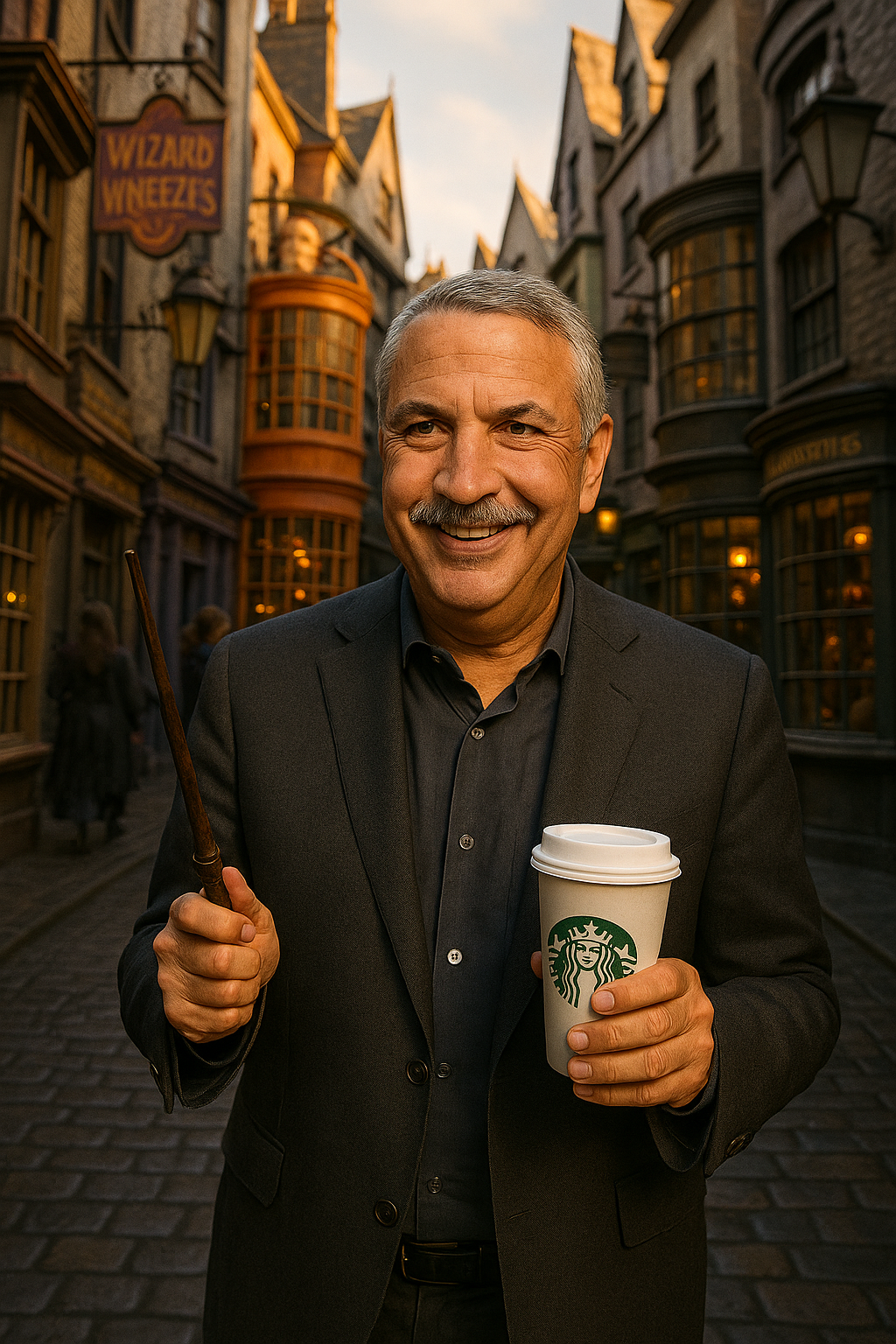
Thomas L. Friedman - who did not write this piece - armed with a wand and a venti latte, explores the shifting currents of magical globalization in Diagon Alley—where spellcraft meets supply chain.
Magic in the Age of AI
And what of AI? Here’s the billion-galleon question: can artificial intelligence do magic?
At first glance, the answer is no. Magic in the Potterverse is bound to biological and hereditary limits. Wands choose the wizard. AI doesn’t have a soul—or so the Unspeakables at the Department of Mysteries would argue.
But look deeper. Already, AI is being used to optimize spellcasting sequences, improve potion safety, and automate low-grade enchantments. A team at MIT (Magical Institute of Thaumaturgy) has developed a large language model that can generate plausible incantations based on ancient Latin and Aramaic spell roots. They call it GPT-Wingardium.
This is where things get weird. If machine learning can replicate the form of magic—even if not the animus—then we may be entering a kind of augmented enchantment era. The wand may still choose the wizard, but the wizard is increasingly choosing the app.
Conclusion: From Hogwarts to Helsinki
When I think about the flat magical world, I think about a young witch in rural Uganda learning charms via satellite link. I think about a Muggle-born coder in Buenos Aires reverse-engineering broomstick physics. I think about hybrid summits where dragons are offset with carbon credits and centaurs quote Amartya Sen.
In other words: I think this story isn’t about Harry Potter anymore. It’s about us.
Because the question facing the magical world is the same one facing all of us in 2025: How do we preserve the best of our traditions while embracing the open-source dynamism of a connected planet? How do we make sure the magic doesn’t stay locked behind castle walls?
Or, as Professor Dumbledore once put it (in what I now read as a pretty good globalization riff): “It is our choices, Harry, that show what we truly are, far more than our abilities.”
Right now, the magical world is choosing to flatten, to open, to integrate. The real test will be whether the rest of us choose to rise with it—or hide behind our own illusion spells.
Because trust me: the flat magical world is here.
And it’s spellbound.
Thomas L. Friedman is a New York Times columnist and the author of The World Is Flat, Hot, Flat, and Crowded, and his forthcoming book Magiconomics: How Wands, Widgets, and Wi-Fi Are Reshaping Globalization. He splits his time between Bethesda, Davos, and whatever realm contains the most “dynamic convergence zones.” Friedman believes the wand chooses the wizard—but the market chooses the wandmaker. His spirit animal is a high-speed rail connecting Hogwarts to Shenzhen.
Note: This piece of writing is a fictional/parodic homage to the writer cited. It is not authored by the actual author or their estate. No affiliation is implied. Also, the Foreign Affairs magazine cover above is not an official cover. This image is a fictional parody created for satirical purposes. It is not associated with the publication’s rights holders, or any real publication. No endorsement or affiliation is intended or implied.
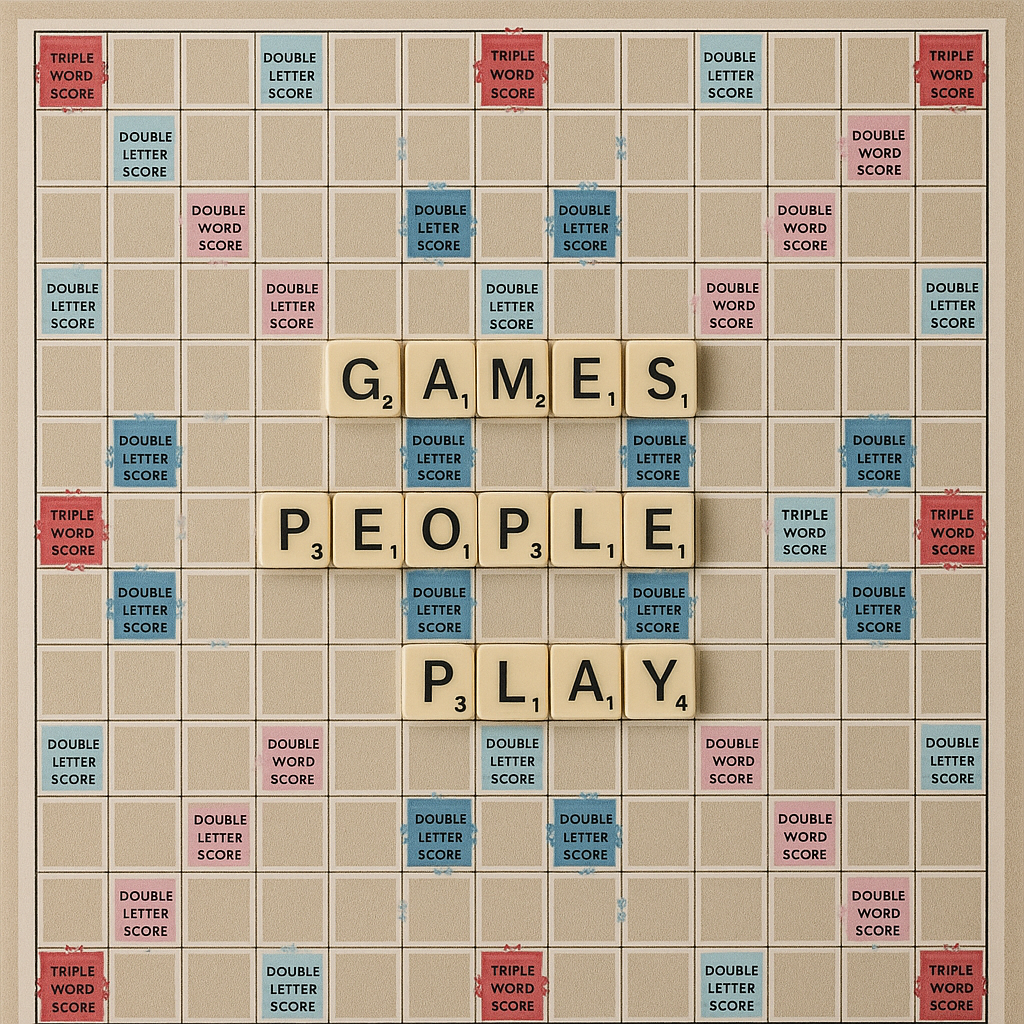
For ‘Games People Play,’ Foreign Affairs invites the finest strategic minds of our era to analyze the enduring conflicts, shifting alliances, and power dynamics that define the multiverse. From the Gamma Quadrant to the Seven Kingdoms, from the plains of Rohan to the Rim Worlds, the logic of statecraft, deterrence, and ambition holds. These dispatches offer sober assessments of real events in real worlds—where borders move, empires fall, and the game, always, is power—and its handmaiden, influence.
Leave A Comment