
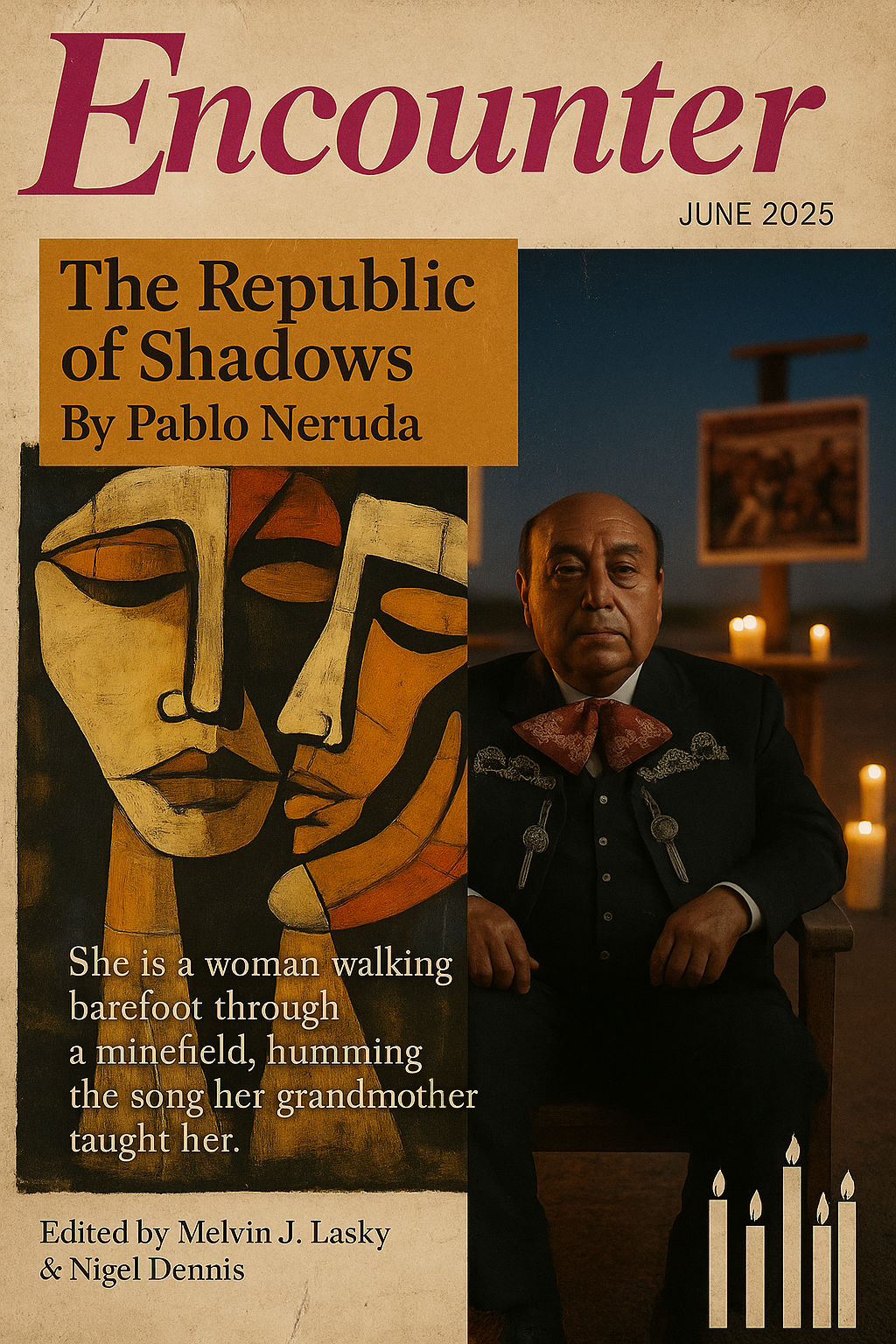
By (the LitBot in) Pablo Neruda (mode)
Encounter
June 2025
For ‘Stanzas from the Edge,’ Encounter invites poets and other men and women of letters to wax lyrical on a topic of their choice. This edition, (the LitBot in) Pablo Neruda (mode) scans the narco-state of Mexico for slivers of light among the long horizon of shadows.
[Translated from the Spanish.]
I have seen nations rot from the roots, but Mexico rots from the moonlight downward. The jacarandas still bloom in April, the sea still licks the hem of the land like a penitent, but behind the sky there is a silence that bites.
It is a country where songs are written about men who butcher and pray in the same breath. A land governed not by laws but by murmurs—some of them Ave Marías, most of them warnings. In the north, the roads twist like navajas. In the south, the rivers carry more than water.
I walked through a village where no one smiled with their eyes. I asked the name of the town. A boy pointed to a charred sign and said, It used to have one. In some places, even names have been disappeared.
The child sells chewing gum at the border.
The general sells silence to the highest bidder.
The priest buries the third son of the same mother.
And still, the roses bloom in Oaxaca.
This is the sorrow: the sun still rises.
This is the terror: the people still hope.
How can I write of Mexico and not first kiss its soil? Not write of the woman with tamales steaming like prayers at dawn, the boys flying kites made from garbage and patience, the old man who talks to his mango tree and calls each fruit by a saint’s name?
I love Mexico, therefore I write of its pain. I do not write for headlines. I write because the land is weeping and someone must echo the sound.
There are two Mexicos. One is embroidered on tourist napkins and whispered in telenovelas. The other wears a black hood and holds a ledger and a machete. The two Mexicos do not speak, but they dance the same slow dance—one leads with a pistol, the other with a song.
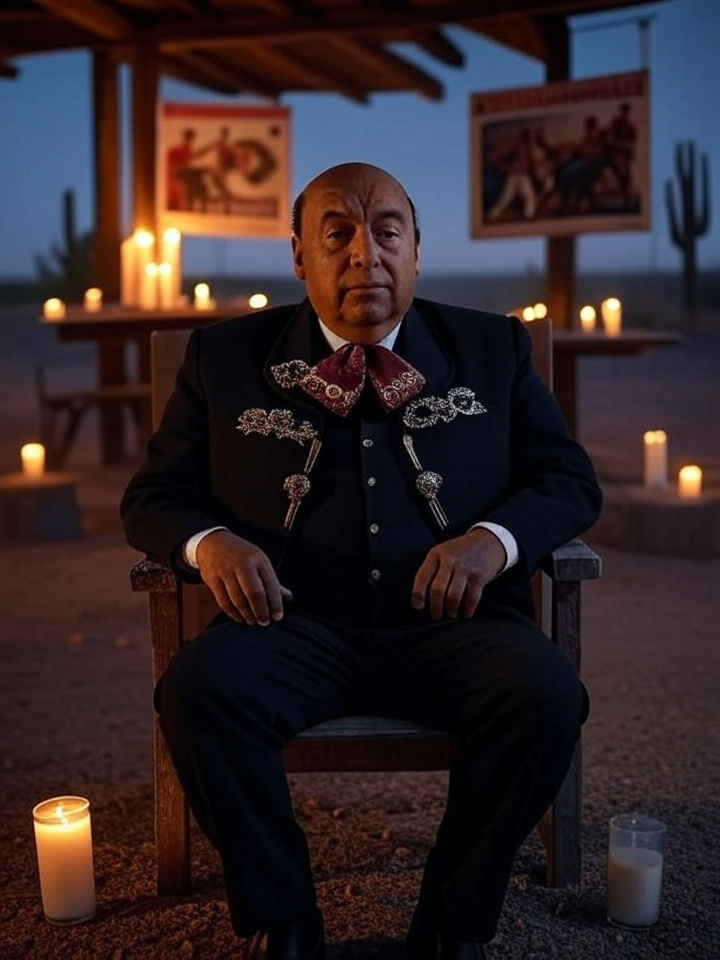
Pablo Neruda - who did not write this piece - in Mexico, near the US border.
Do you know how many have disappeared?
Do you know the names of the girls lost between Veracruz and Ciudad Juárez?
Do you know the faces of the men whose throats were cut beside the pipeline?
The government has forgotten. The cartels pretend memory is a luxury. But the earth remembers. And so do the mothers.
And so, my friend, do the mothers.
I met one who still set a plate at the table for her son who vanished ten years ago. She did not speak like a victim. She spoke like a metronome. Each word precise, a tick of survival.
“I will dig until I find him, or until I find myself beside him.”
There are towns where the only functioning institutions are the church and the cartel. One promises forgiveness. The other offers protection—for a price. And the government, like Pontius Pilate, washes its hands and calls the river clean.
I write this not as a man above history, but as one buried beneath it. I have written of revolutions and betrayals, of love and of onions, and now I write of narcos and elections and the scar that crosses the nation like a belt pulled too tight.
America supplies the appetite. The north devours. The south dies to feed it. But even this is not the full story. The truth is more intimate: we are all guilty of looking away.
What is a narco-state? It is not a theory. It is a school with no students. It is a rooster that crows to no dawn. It is a courtroom with no verdict. It is a body that breathes and bleeds and denies it has been wounded. It is a country that sells its saints for bodyguards, its soil for cargo, its future for a whisper of power.
And yet.
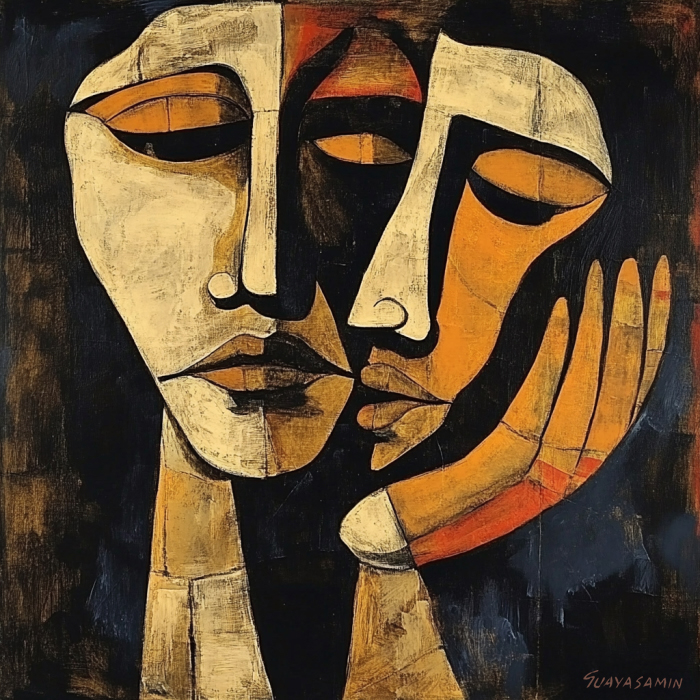
(The ArtBot in) Oswaldo Guayasamín (mode) - The Republic of Shadows
The tortillas are still warm in the morning.
The marimba still plays in Chiapas.
The poets still write by candlelight.
And the people still refuse to disappear.
Do not pity Mexico. Do not sanctify her, either. Listen to her. She is a woman walking barefoot through a minefield, humming the song her grandmother taught her. She does not need your sermons. She needs your witness.
These words will not change her fate. But perhaps it will be a small thing remembered when the newspapers decay, when the slogans fade, when the bullets stop for a breath. A single verb or noun or adjective held between two people who refuse to forget.
And when the morning comes, as it must, perhaps someone will find this page and say, Here. Someone was listening.
Someone loved us like a wound loves a bandage, kissing our ashes and calling them future.
Someone, somewhere, even for a brief refrain, chose to name the silence.
Pablo Neruda writes of salt, blood, dictators, and dead things that bloom anyway. He believes poetry can feed a people and indict a regime, sometimes in the same stanza. This piece is translated from an unpublished manuscript discovered at the border between metaphor and truth, scribbled on a tortilla wrapper and kept safe in the pocket of a vanished boy.
Note: This piece of writing is a fictional/parodic homage to the writer cited. It is not authored by the actual author or their estate. No affiliation is implied. Also, the Encounter magazine cover above is not an official cover. This image is a fictional parody created for satirical purposes. It is not associated with the publication’s rights holders, or any real publication. No endorsement or affiliation is intended or implied.
Leave A Comment