
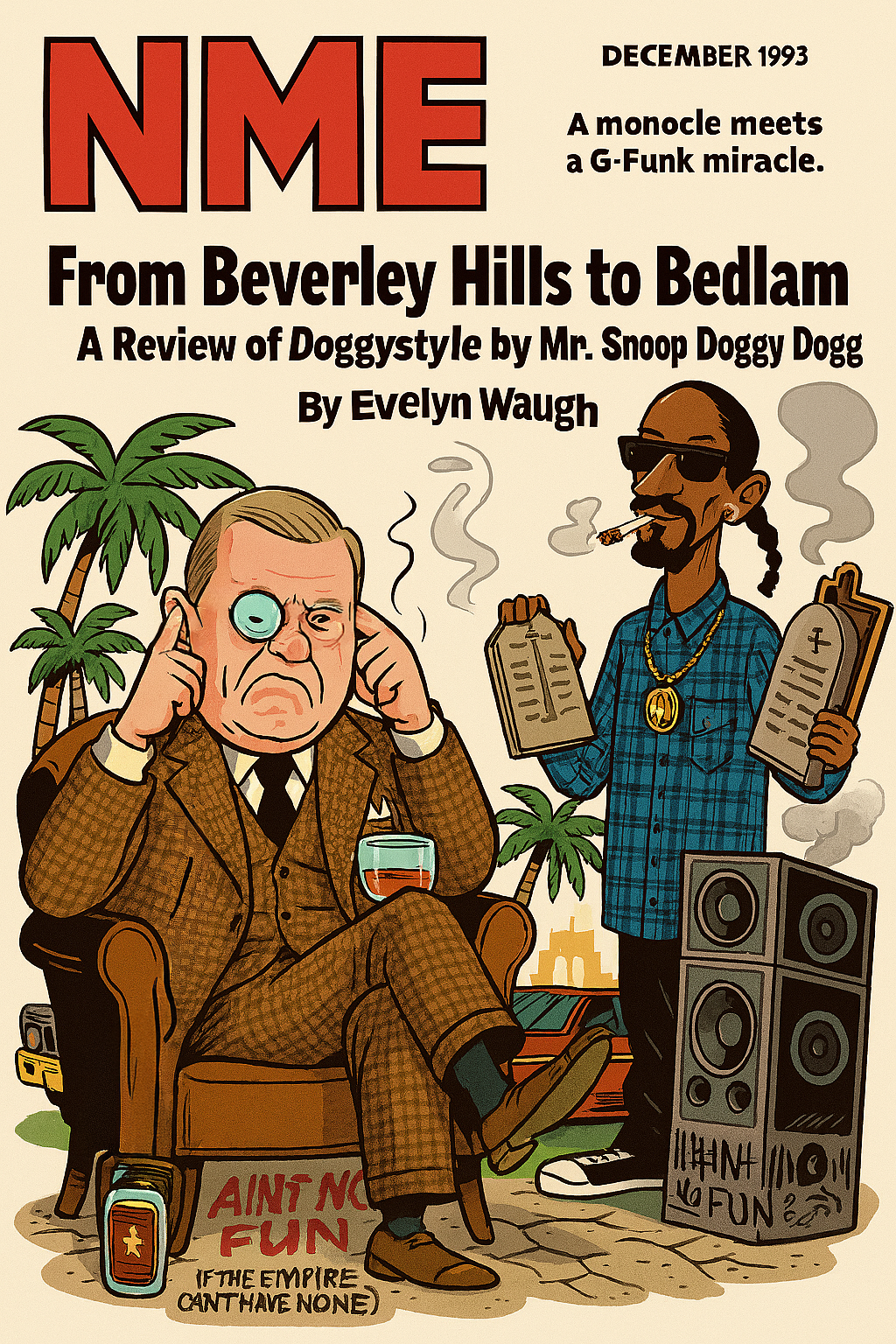
By (the LitBot in) Evelyn Waugh (mode)
NME
December 1993
It was a warm and soulless Thursday when the envelope arrived. Inside was a compact disc (a hateful modern contraption resembling a shaving mirror) bearing the words Snoop Doggy Dogg — Doggystyle. I assumed it to be a kennel manual or, less plausibly, an illustrated guide to the decline of Anglican morals. I was mistaken.
The editors of this periodical, clearly in the throes of a prolonged and unmedicated nervous episode, had determined that I, a gentleman of not inconsiderable refinement and (until now) unblemished Catholic sensibilities, should review this ‘album’ of ‘rap music.’ A form which, I am told, consists chiefly of rhythmically declaimed vulgarities over a background of what appears to be industrial sabotage. As a public duty—and to satisfy a certain morbid curiosity cultivated during an unfortunate fortnight in Tangier—I accepted.
The first moments of Doggystyle were not unlike arriving uninvited at a tribal fertility ceremony held in a garage. A concatenation of whines, wheezes, and obscene canine impersonations gave way to the voice of the titular Mr. Dogg, who speaks with the peculiar intonation of a concussed jazzman. His diction is an affront to the English language, which he batters into submission like a drunkard manhandling a telegraph boy.
Track after track, the listener is subjected to an encyclopaedia of modern American degeneracy: narcotics, fornication, homicide, an alarming degree of automotive worship, and the persistent denigration of women, whom Mr. Dogg regards with the sort of affection normally reserved for headlice. The listener is expected to endure all this while being bombarded by a basso profondo ‘bassline’ which makes the very furniture hum with nervous tension. My valet was forced to steady the grandfather clock.
The production is credited to one Dr. Dre—evidently not a physician in any field recognised by the Royal College. His technique involves taking fragments of what I am informed are reputable records in the ‘funk’ genre (a name which, to my ear, suggests not so much music as the scent left behind by a particularly energetic chambermaid) and overlaying them with what can only be described as aural pornography. The result is not music in the civilised sense of the term, but rather a kind of sonic graffiti—vulgar, insolent, and distressingly permanent.
There is a track entitled ‘Gin and Juice’ which, one might hope, would extol the restorative virtues of a modest aperitif. Alas, it is instead an anthem of sloth and intoxication, in which Mr. Dogg brags of his inebriated stupor while performing what he claims is a ‘party.’ From the details provided, this ‘party’ seems to consist chiefly of laying about and engaging in egregious reproductive experiments. The music has all the charm of a tax audit in Compton.
Elsewhere, in ‘Murder Was the Case,’ Mr. Dogg presents a morality tale in which, having suffered an attempt on his life (an occupational hazard, one gathers, in the rap profession), he engages in a Faustian bargain with the Devil himself. This nod to metaphysics might have pleased me were it not delivered in such a way as to render St. Augustine wholly unintelligible. The Devil, one presumes, declined the bargain on grounds of taste.
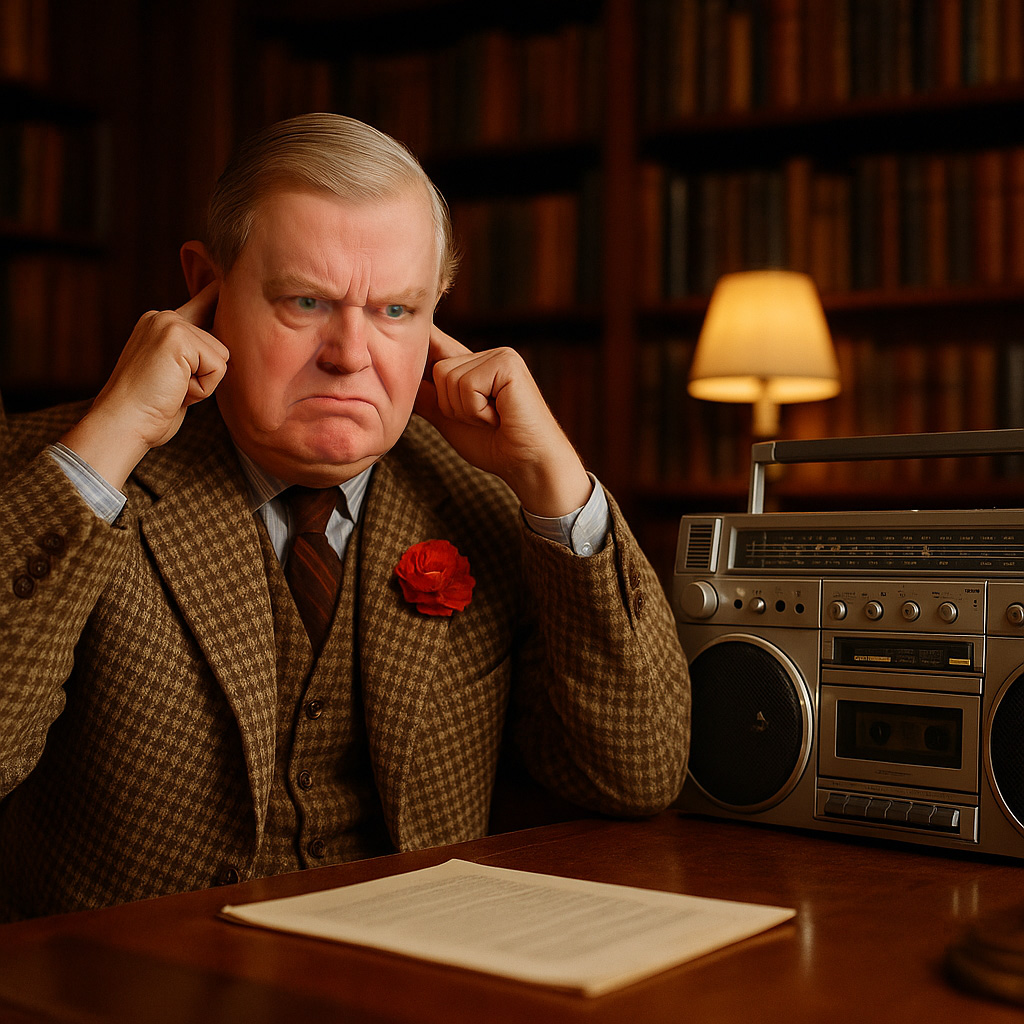
The newest reviewer for the NME.
Of course, the album is shot through with a sort of crude vitality. One cannot deny that Mr. Dogg has, in his own deplorable idiom, a certain command of tone. He inhabits the persona of louche delinquent with evident relish, and his languid, molasses-drenched voice—though utterly devoid of nuance—has a kind of hypnotic quality, like the drone of a malaria-infested fan in a colonial bungalow.
And yet, beneath the bombast and braggadocio, there lies something more sinister. One detects a hollowness, a kind of yawning spiritual desolation. Mr. Dogg’s world is one without fathers, without conscience, without memory. It is the post-Christian slum writ large in stereo, a civilisation collapsed into a haze of consumer electronics and pelvic thrusting. Where once we had Newman and Chesterton, we now have Snoop and his ilk. The barbarians, it seems, have taken over the gates and are busy producing 12-inch remixes.
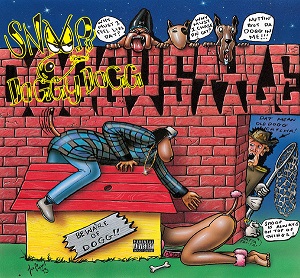
Snoop Doggy Dogg - Doggystyle.
It is customary, I gather, for reviewers to identify a ‘standout track.’ If by ‘standout’ we mean ‘the one which produced the least sensation of being physically assaulted,’ then I nominate ‘Ain’t No Fun (If the Homies Can’t Have None).’ Its melody—borrowed wholesale from some bygone crooner—is oddly pleasant until one discerns the lyrics, which detail a scheme of romantic egalitarianism so obscene it would make the Marquis de Sade write a letter to the Times.
I asked my manservant (a Nigerian of considerable dignity) what he made of the album. He listened gravely for five minutes and then, with the finality of empire, turned it off. “Sir,” he said, “this is not music. This is a curse.” I could not improve upon his assessment.
In the end, what does one say of Doggystyle? It is not a record one reviews so much as survives. It is, I suppose, the logical terminus of a culture that has mistaken sensation for significance and volume for virtue. Like the last days of Rome, it is loud, lewd, and faintly terrifying.
But perhaps that is the point. Perhaps Mr. Dogg, in his own Neanderthal way, has held up a mirror to modern man and revealed a creature so enfeebled, so morally bankrupt, that all he can do is mumble obscenities over a borrowed beat while polishing his rims.
And for that, I suppose, we must thank him.
RATING: 2/10 (for sheer audacity)
Evelyn Waugh is a disgruntled traditionalist marooned in a collapsing century, armed only with a monocle, a flask of brandy, and a boundless contempt for modernity. He once mistook a rap album for an act of war and considers the decline of the Anglican choirboy a national emergency. He still believes civilisation peaked somewhere between Brideshead Revisited and the Empire Exhibition.
Note: This piece of writing is a fictional/parodic homage to the personalities cited. It is not authored by them or their estates. No affiliation is implied. Also, the NME magazine cover above is not an official cover. This image is a fictional parody created for satirical purposes. It is not associated with the publication’s rights holders, or any real publication. No endorsement or affiliation is intended or implied.

From Auto-Tune to algorithmic jazz, ‘Earwax’ filters the soundscape so you don’t have to. This is our noise-soaked corner of musical commentary, where critics, fans, and the occasional ghost of Elvis Presley weigh in on the tragic comedy of modern audio. Not all bangers slap. Some just bruise.
Leave A Comment