
By Anton Verma
Darrel adjusted his glasses and squinted at the rental application on his laptop. The cul-de-sac in Northcote, a leafy pocket of outer suburban Melbourne, looked perfect: quiet, affordable, close enough to the city for client Zoom calls but far enough to feel like a retreat. The house was a brick veneer, nothing flash, with a neat lawn and a lemon tree out front. But the application was odd. A recent photo? A questionnaire about his family, hobbies, and ‘community values’? It felt like applying for a job at a fancy law firm, not renting a two-bedroom in the ’burbs.
“The locals are particular,” the real estate agent had said over the phone, her voice clipped. “They take pride in their street. No riff-raff, you know.”
Darrel, thirty-four, single, and a touch shy, wasn’t riff-raff. He was a financial consultant, worked from home, paid his bills on time. His parents had passed years ago, and, as an only child, he kept to himself. His social media was a ghost town—LinkedIn for work, a few X posts about the footy, and that was it. He uploaded a photo (a slightly awkward selfie from a work conference, his round face flushed under fluorescent lights) and sent the form.
A week later, the keys were his.
The cul-de-sac, Wattle Crescent, was as idyllic as the listing promised. Kids rode bikes in lazy circles, magpies warbled from gum trees, and the air smelled of jasmine and barbecued snags. Darrel’s new landlord, Neil, literally lived next door. A wiry bloke in his forties with a mullet that screamed ‘I peaked in the ’80s,’ Neil greeted Darrel with a crushing handshake and a grin.
“Mate, welcome to the street!” Neil’s voice was pure ocker, loud enough to startle a nearby lorikeet. “You’ll love it here. Proper community, none of that inner-city wank. No Airbnb, no vegans, no Greens—that’s the bloody covenant, mate. We keep it simple round here. Pop over for a feed tonight, yeah? The missus is crook, but the kids’ll be stoked to meet ya.”
Darrel had never been anyone’s ‘mate.’ Not at school, not at uni, not even in his old apartment block where the closest thing to friendship was a nod in the lift. The idea of being invited in—of being wanted—unsettled him almost as much as it thrilled him. So he wasn’t too ‘crash hot’ with strangers, and his waistband was already tight from too many Uber Eats orders. “Oh, I’m trying to lose a bit of weight, so—”
“Nah, none of that diet nonsense!” Neil slapped Darrel’s shoulder, nearly knocking his glasses askew. “Live and let live, mate. You’re in Oz, not some kale-munching yoga cult. Seven o’clock, bring nothin’ but your appetite.”
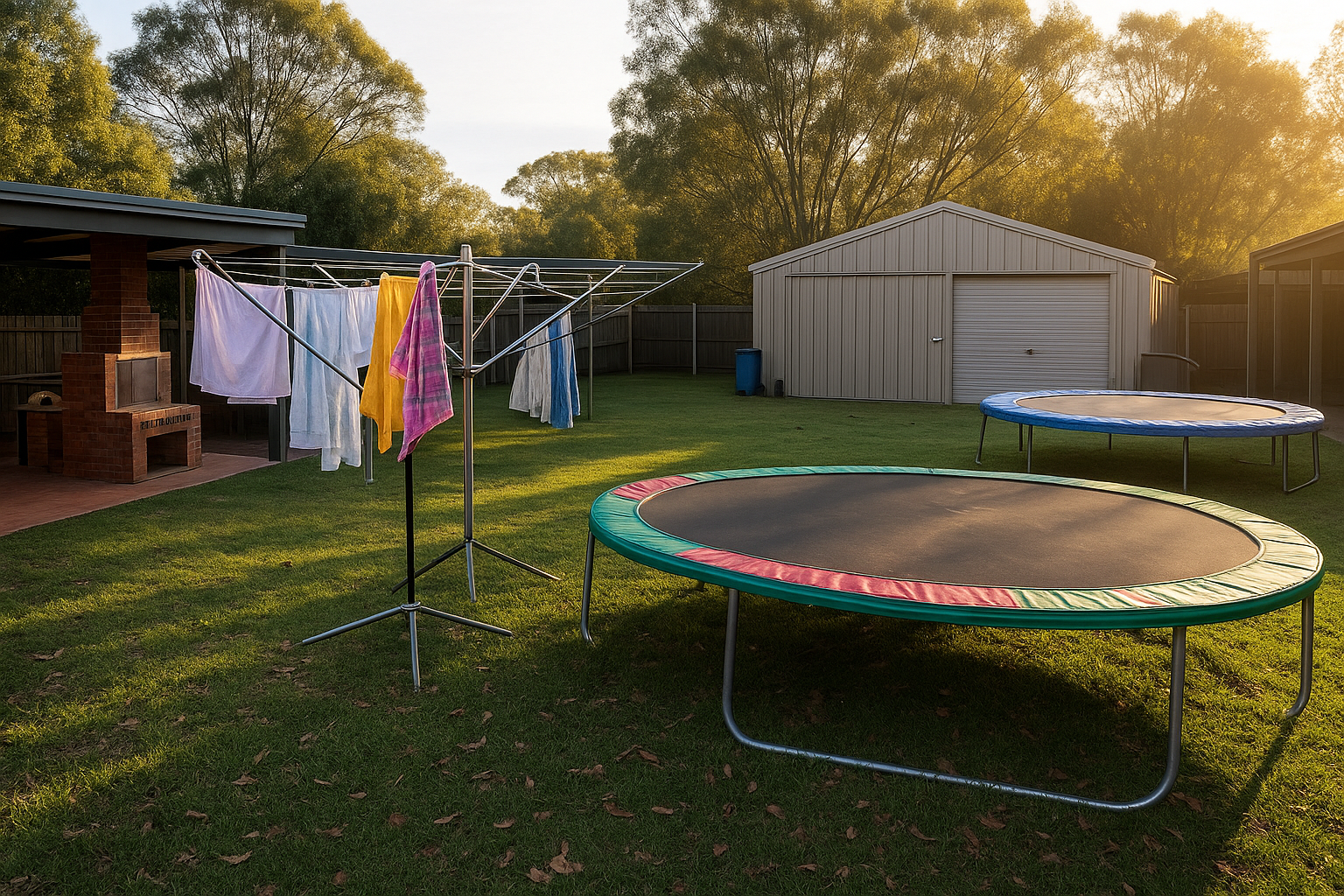
That evening, Darrel found himself at Neil’s sprawling weatherboard, a chaotic paradise of kids’ toys and a Hills hoist sagging under damp footy jerseys. Neil’s brood—eight kids, ranging from a toddler to a lanky teen—swarmed the dining room. The table groaned under plates of roast lamb, pavlova, sausage rolls, and a vat of creamy potato bake. Darrel’s stomach rumbled despite himself.
“Where’s your ‘missus’?” Darrel asked, settling into a chair as a kid shoved a VB stubby into his hand.
“Poor love’s bedridden,” Neil said, carving the lamb with a flourish. “Chronic fatigue or some such. Docs are useless. Kids look after her, take her plates of tucker.
“Right, you lot?”
The kids nodded, barely looking up from their food. Darrel noticed one girl, maybe ten, pile a plate with enough roast to feed a footy team and shuffle off toward a closed door at the end of the hall. He shifted uncomfortably, self-conscious about his own plate, piled high at Neil’s insistence.
“I’ve tried diets,” Darrel admitted, poking at a sausage roll. “Keto, intermittent fasting, even that ‘bloody’ cabbage soup thing. Never sticks.”
“Good on ya for tryin’, but it’s all crap,” Neil said, winking. “Eat what makes ya happy, Darrel. Life’s too short for rabbit food.”
The dinners became a regular thing.
Every week, Neil would holler across the fence, “Oi, Darrel, get your arse over here for a feed!” Darrel, too polite to say no, went. The food was always rich—lamb shanks swimming in gravy, meat pies with flaky pastry, lamingtons dusted with coconut. The kids were relentless, too, showing up at Darrel’s doorstep with Tupperware of leftovers or ‘extra’ Tim Tams or Anzac bikkies. At first, Darrel was chuffed. It was like having a family, something he’d never really had. But after a month, it felt…odd. Why so much food? Why always meat-heavy dishes? And why did the kids watch him eat, their eyes sharp like galahs sizing up a crust?
Summer crept in, the air thick with eucalyptus and the buzz of cicadas. Darrel’s work kept him busy, his home office a cocoon of spreadsheets and client calls. He barely noticed the extra kilos piling on, his shirts straining at the buttons. He did notice Neil’s backyard, though, visible from his kitchen window. It was a kid’s dream: trampolines, cricket stumps, a cubby house—and, at the far end, a massive shed, padlocked, its corrugated iron glinting in the sun. Once, Darrel saw Neil emerge from it, wiping his hands on a reddened rag. Neil caught his eye and waved, but Darrel felt a prickle of unease, like he’d copped a bouncer from Warnie himself.
“Big shed,” Darrel mentioned casually at the next dinner, as a kid ferried another towering plate to the mysterious bedroom.
“Yeah, me workshop,” Neil said, tearing into a chop. “Bit of a tinkerer, meself. Fix bikes, build stuff for the kids, let off steam. Man’s gotta have his space, eh?”
Darrel nodded, but the prickle lingered. There was something about Neil’s grin, a tad too wide, like a dingo eyeing a lamb. And the kids—always watching, whispering. Once, Darrel swore he heard the youngest, a gap-toothed boy, mutter “he’s gettin’ ready” to his sister. Ready for what? A marathon? Darrel chuckled it off, but the disquiet stuck like a burr.
In late November, Neil announced the big event.
“Family barbie, mate! Whole clan’s comin’—me siblings, cousins, their rug rats. Proper shindig. You’re the guest of honour, Darrel. No excuses!”
Darrel’s stomach twisted, but he couldn’t say no. Not to Neil, who’d been nothing but welcoming. “Sure, sounds…great.”
The day of the barbecue, Wattle Crescent hummed with life. Utes and Commodores lined the street, AC/DC blared from a portable speaker, and the smell of sizzling meat wafted from Neil’s backyard. Darrel, sweating in a too-tight polo, stepped into the chaos. Dozens of people—Neil’s brothers, sisters, cousins, their spouses, and kids—filled the yard. They all had Neil’s wiry build, his sharp eyes. They clapped Darrel on the back, pressed stubbies into his hands, called him ‘mate’ like they’d known him forever. The food was endless: racks of ribs, T-bone steaks, snags as thick as cricket bats. Darrel’s plate was never empty, someone always piling it high.
“Eat up, Darrel!” Neil bellowed, flipping a burger with a flourish. “Gotta keep your strength up!”
The sun dipped low, turning the sky the colour of a half-melted Zooper Dooper left out on the esky. Darrel, woozy from beer and heat, excused himself to use the loo. Inside, the house was quiet, the party’s noise muffled. As he passed the bedroom door, he paused. A faint sound—shuffling, like heavy fabric dragging across the floor. Curiosity got the better of him. He knocked softly. “Hello? You okay in there?”
The door creaked open. Darrel froze. The woman in the doorway was beyond massive, her frame filling the space like a hippo that would’ve squashed Steve Irwin into submission. Her skin was sallow, her eyes sunken but glinting with something feral. She wore a stained kaftan, and her smile—God, her smile—was a slash of teeth that made Darrel’s knees buckle.
“You’re Darrel,” she rasped, her voice like gravel. “They said you’d be…perfect.”
Before he could speak, hands grabbed him from behind—strong, relentless. Neil’s brothers, maybe, or cousins. They dragged him through the house, out the back, towards the shed. Darrel’s shouts were drowned by the party’s din, AC/DC’s “Highway to Hell” mocking him. The shed’s padlock clicked open, and he was shoved inside.
The shed was a nightmare, as if the love child of Brett Whiteley and Ken Done had moulded a diorama of an abattoir for the lobby of the Australian Meat Industry Council. Blood-smeared walls, hooks dangling from the ceiling, a stainless-steel table streaked with red. Knives, cleavers, and saws lined a bench, gleaming under a flickering bulb. Darrel’s glasses fogged with panic as Neil stepped in, his grin wider than ever.
“Mate, don’t take it personal,” Neil said, as his brothers tied Darrel’s wrists with cable ties. “It’s tradition, see. Goes back to me Gramps. Country bloke, used to nab city slickers off the Hume Highway, feed ’em to his pigs. Me old man, though—he was the clever one. Studied human biol at Melbourne Uni, worked out how to…make use of the meat, y’know?”
Darrel’s throat closed. “You…you chose me?”
“Course we did, ya mongoose!” Neil laughed, stripping Darrel’s shirt off with a pocketknife. “Me and me cousins own that house you’re in, as ya know. Been doin’ this for years. Your application? Bloody gold. No family, no mates, no one to miss ya. And that pic—mate, you looked…tender. I got it blown up bloody big at Officeworks and pinned to the wall of the bedroom. Reckon the wife’s put on weight just slobbering over it.”
The shed door opened again, and the wife in question shambled in, her kaftan dragging like a butcher’s apron. Darrel’s half-scream choked off as he saw her properly—her bulk, her hunger, her sheer wrongness. Even Whiteley (on plutonium grade disco biscuits) couldn’t have captured this, the weighty, visceral grotesquery of her presence. The kids filed in behind her, the youngest clutching tiny knives, their eyes bright with excitement.
“Slaughter Season,” Neil said, clapping a hand on his son’s shoulder. “Every few years, we pick a good ’un. Feed the whole clan. The little tykes get blooded, learn the ropes. Reckon they’ll take it to every suburb in Melbourne one day.”
Darrel’s vision blurred, his latest (and, it turned out, final) scream barely a whimper as the wife leaned close, her breath hot and sour. The last thing he saw was the glint of a toy-sized cleaver, wobbling in a child’s hand, before the world went red.
Outside, the barbecue roared on. The meat sizzled, the beer flowed, and Wattle Crescent echoed with laughter under the summer stars.
© Anton Verma, 2025

Leave A Comment