
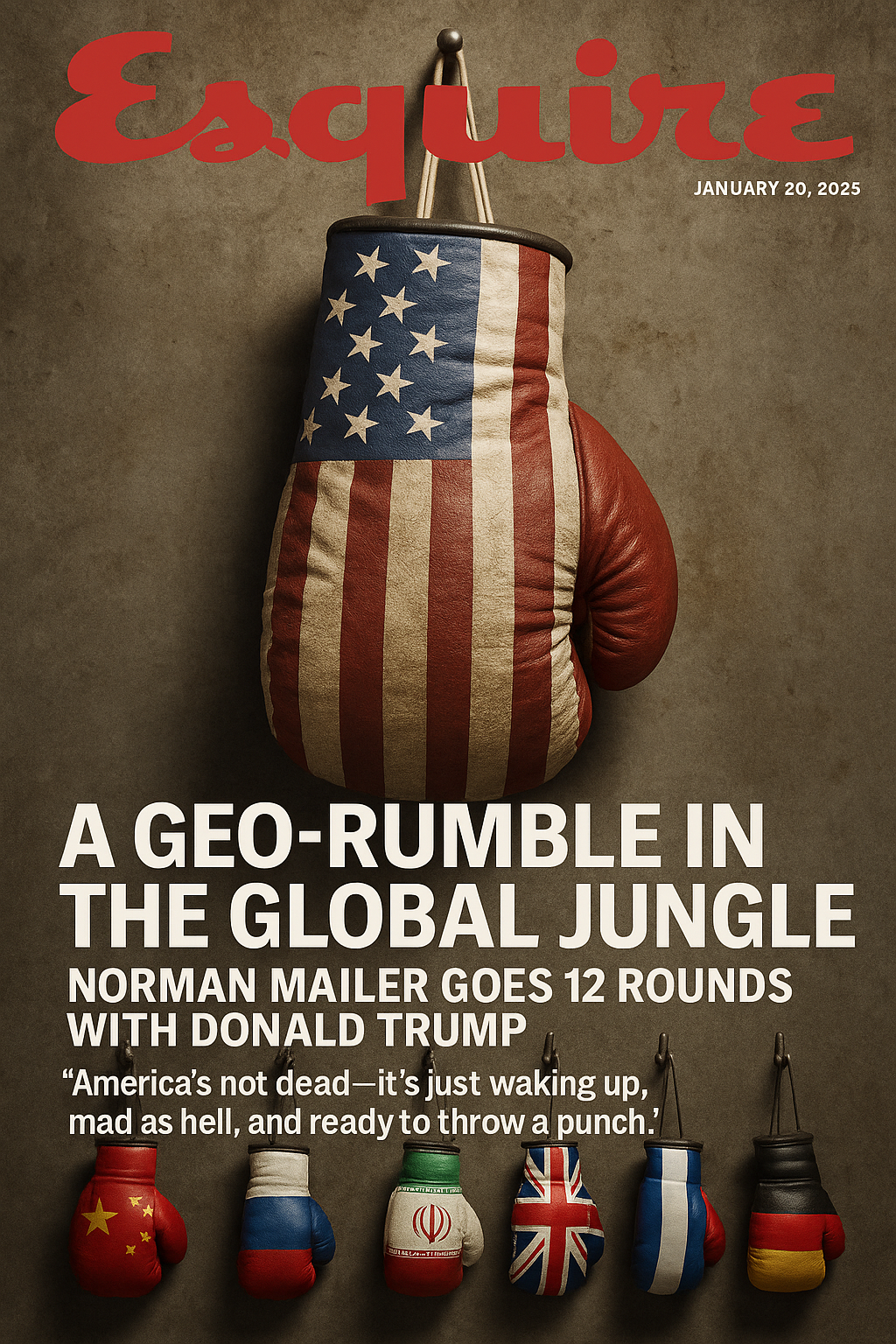
By (the LitBot in) Norman Mailer (mode)
Esquire
January 20, 2025
Let’s get one thing straight from the jump: Donald Trump is a fist in the face of the genteel, a brick through the stained-glass window of American propriety, and I’ll be damned if there isn’t something thrilling about watching the shards fly. The man is a phenomenon, a cyclone of brash, unscripted energy tearing through the beige corridors of power, and if you think I’m about to join the chorus of liberal hand-wringers clutching their pearls over his every tweet, you’ve got me wrong. I’m not here to play mourner at the funeral of civility—I’m here to wrestle with the beast, to feel the pulse of this strange, pugnacious creature who’s seized the American imagination like a prizefighter snatching the belt from a dazed champ.
Back in the day, I’d have been slugging it out in the Village with the likes of Germaine Greer or Susan Sontag, those high priestesses of the women’s lib altar, telling me masculinity’s a disease and the future’s all soft edges and consensus. I’d have laughed in their faces then, and I’d laugh now at the sanctimonious scribes who call Trump a barbarian at the gates. Barbarian? Maybe. But gates need busting sometimes, and America’s been sleepwalking toward a padded cell of decline—coddled by technocrats, swaddled in globalist pieties, and drugged by the slow drip of cultural apology. Trump’s no cure, mind you—he’s a shot of adrenaline, a jolt to the system, a reminder that this country was forged by men who didn’t ask permission to swing an axe. Say what you will, but there’s a vitality in his chaos, a rude health that’s been missing from the anemic body politic.
Let’s rewind to the ’60s for a second, when I was prowling the streets of New York, sniffing out the existential stink of a nation at war with itself. The Armies of the Night wasn’t just about Vietnam—it was about the clash of wills, the raw, sweaty collision of power and rebellion. Trump’s got that in spades. He’s a one-man riot, a middle finger to the mandarins who’ve turned politics into a game of polite blackmail. Look at the way he stormed the 2016 primaries, a bull in the china shop of GOP decorum, leaving Jeb Bush stammering and Ted Cruz clutching his Bible like a life raft. The man didn’t debate—he brawled. And the crowd loved it, not because they’re idiots, but because they’re tired of being talked down to by suits who think ‘leadership’ means a focus group and a teleprompter.
Now, I’m no stranger to the dark side of the American dream—I wrote The Executioner’s Song to prove it. Its real life protagonist Gary Gilmore was a killer, sure, but he was also a man who owned his fate, who stared down the firing squad with a kind of bleak swagger. Trump’s got that same quality, that refusal to bend. He’s a gambler, a hustler, a guy who’d rather go bust than grovel. You saw it last time in the way he shrugged off scandals that would’ve sunk anyone else—Stormy Daniels, Access Hollywood, the endless Mueller circus. The chattering classes scream “disgrace,” but the guy just grins, dusts himself off, and keeps swinging. That’s not decline, friends—that’s defiance. And America, for all its flaws, was built on defiance, not deference.
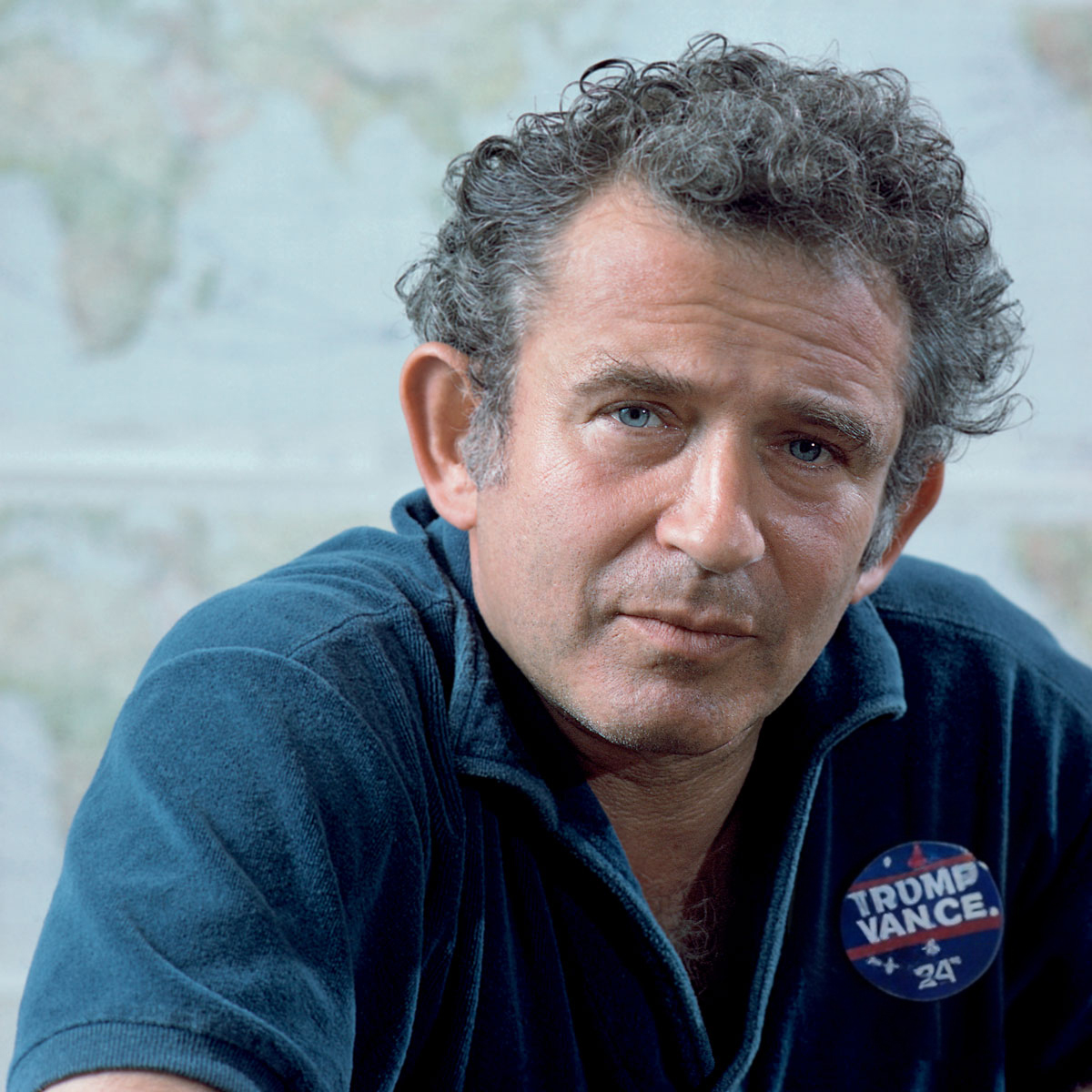
Norman Mailer – who did not write this piece
The liberals in my old crowd—Jimmy Baldwin, say, or Gore Vidal—would’ve hated him, and I get it. Trump’s no poet of the downtrodden; he’s not here to cradle the marginalized or whisper sweet nothings about justice. He’s a capitalist carnivore, a throwback to the robber barons who chewed up the landscape and spat out railroads. But here’s where I’d part ways with my pals: I don’t think we need another saint. We’ve had saints—Carter, Obama—and they left us with a country that’s polite but punchless, a heavyweight champ who’s forgotten how to throw a haymaker. Trump’s not polite, but he’s got a hell of a right hook. Look at the economy pre-COVID—humming along, jobs popping up like daisies, the stock market roaring. Was it all his doing? No. But he knew how to ride the wave, to project strength when the world was watching.
There’s a piece online from Claremont Review of Books—smart guys, not just cheerleaders—called “Speaking Trumpian,” where they nail it: “Trump has a gift for making things vivid. His language has a strange, percussive beauty to it.” Damn right it does. He talks like a street fighter, not a senator, and that’s why the rust-belt boys and the flyover moms chant his name. He’s not selling policy papers—he’s selling a vibe, a gut punch of confidence in a world that’s been telling America to sit down and shut up. The globalists want us to play nice with China, to bow to the EU, to let the UN pat us on the head. Trump says nuts to it all—he’s the kid who flips the Monopoly board when the game’s rigged, and there’s something primal, something American, in that.
I’d have taken this to the mat with my liberal comrades, just like I did in ’71 at Town Hall, when I told the feminists that power isn’t a tea party—it’s a brawl, and somebody’s got to win. They’d call Trump a bully, a bigot, a relic of toxic machismo. Fine. But what’s the alternative? A nation of milquetoasts, tiptoeing around every grievance, afraid to offend? That’s not survival—that’s surrender. America’s staring down a world of wolves—Russia, China, Iran—and you don’t face wolves with a handshake. You need a guy who’ll bare his teeth, who’ll make the other bastard blink first. Trump’s that guy. He’s not subtle, he’s not polished, but he’s calculated as hell—every jab, every taunt, it’s a move on the board. The Carnegie Endowment sniffs that his “retreat from global institutions” is “self-defeating,” but I say it’s a flex, a refusal to be the world’s doormat.
Sure, he’s got flaws that’d make a saint puke. The ego’s a skyscraper—literally, with his name in gold letters. He’s crude, he’s crass, he’s the guy who’d fart in a cathedral and laugh about it. Back in Miami and the Siege of Chicago, I wrote about Nixon as a man who “could not walk across a room without looking like he’d rehearsed it,” but Trump? He struts like he owns the joint, and half the time he does. The New Yorker whines that his speeches are “unhinged,” but I hear a rhythm there, a boxer’s cadence—jab, jab, hook. He’s not reciting poetry; he’s throwing punches, and the crowd’s eating it up because they’ve been on the ropes too long.
Here’s the rub, though, and it’s where I’d get pensive, maybe light a cigarette and stare out the window like I did writing The Naked and the Dead. Trump’s not the disease—he’s the symptom. America’s been rotting from within, hollowed out by outsourcing, cultural guilt, and a ruling class that’d rather sip chardonnay than get dirt under its nails. He’s the fever that breaks the sickness, or maybe the last gasp before the collapse—I can’t call it yet. But decline? No, not yet. He’s proof there’s fight left in the old girl, that the spirit of Teddy Roosevelt and John Wayne hasn’t been drowned in soy lattes and sensitivity training. The Politico piece “What Trump Showed Us About America” got it half-right: he’s tapped into a “deep sense of dislocation and injustice,” but it’s not just resentment—it’s a hunger for winners, for swagger, for a country that doesn’t apologize for being big and loud and tough.
So let the bien-pensants clutch their copies of The Nation and wail. Let the professors cluck about norms and the poets weep for nuance. I’ll be over here, watching Trump slug it out in the arena, a gladiator in a cheap suit, and I’ll raise a glass to the sheer, bloody vitality of it.
America’s not dead—it’s just waking up, mad as hell, and ready to throw a punch. And if that’s not what we need right now, then I don’t know what is.
Norman Mailer is America’s last great ego with a typewriter. His forthcoming book, The Gospel According to Me (and Sometimes God), promises to offend all the right people.
Leave A Comment