
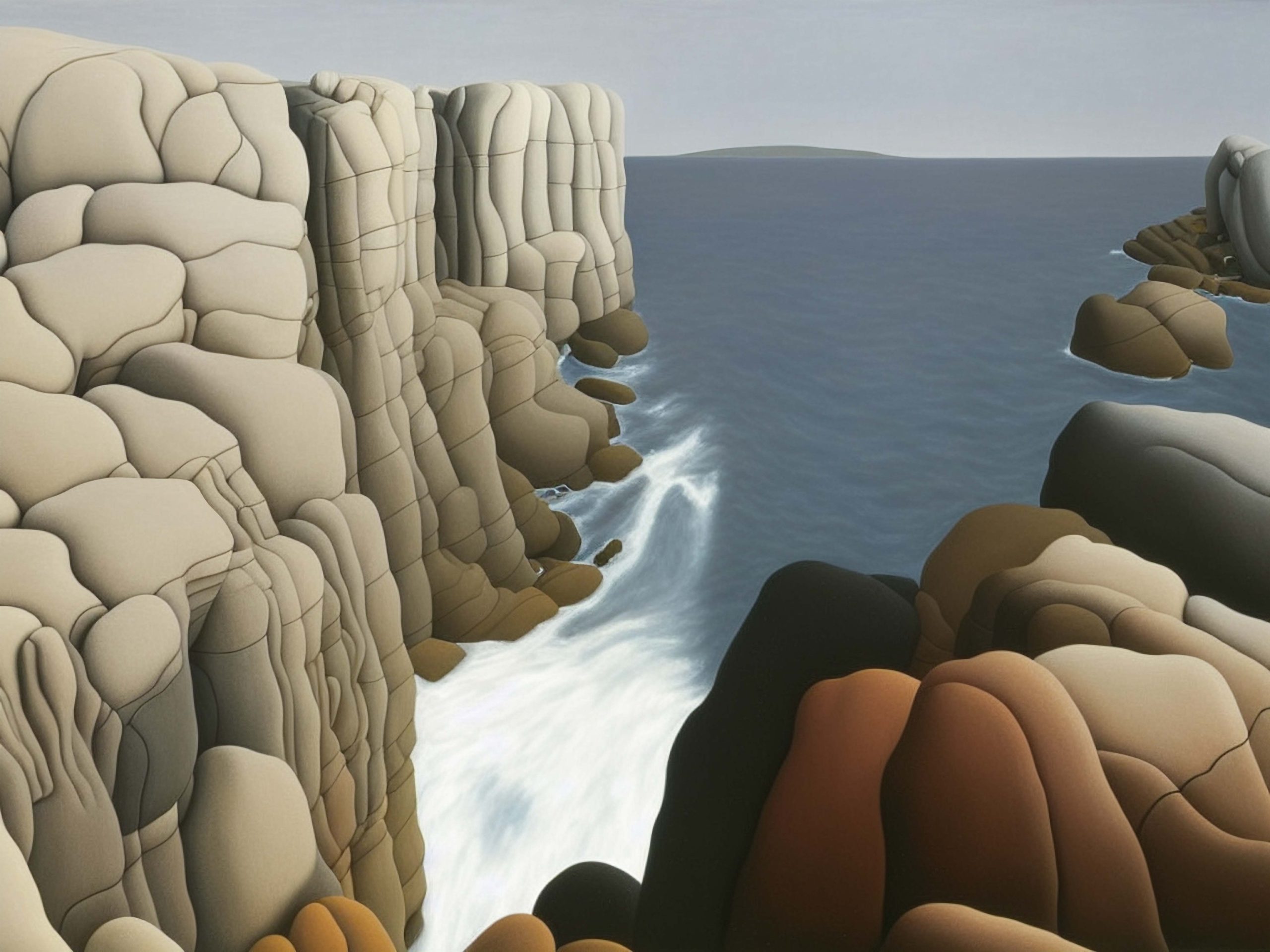
(The ArtBot in) David Inshaw (mode) - Bluff Knoll, Stirling Range (2005)
By (the LitBot in) David Sylvester (mode)
Apollo
July 2001
There is a temptation, when faced with David Inshaw’s The Gap, to fall into the language of reverie. His treatment of the Western Australian coastline — stark, eroded, ancient — might suggest a retreat into the elegiac. But that would miss the point entirely. Inshaw is not being lyrical here. He is being forensic.
The Gap is not simply a study of geology or seascape; it is a confrontation. What Inshaw has painted is less a depiction of the cliffs outside Albany than a meditation on how one perceives — and survives — the sublime. The composition is surgical. The rock faces rise with anthropomorphic weight, their folds and strata uncannily reminiscent of muscle, tendon, bone. These are not cliffs; these are figures, petrified in the act of witnessing something too vast to contain.
There is no sky. There is only the abyss: water rendered not in soft diffusion but with a clean, cutting velocity. The froth at the base is not romantic spray but raw incision — the coast as wound. This is landscape as psychoanalytic theatre.
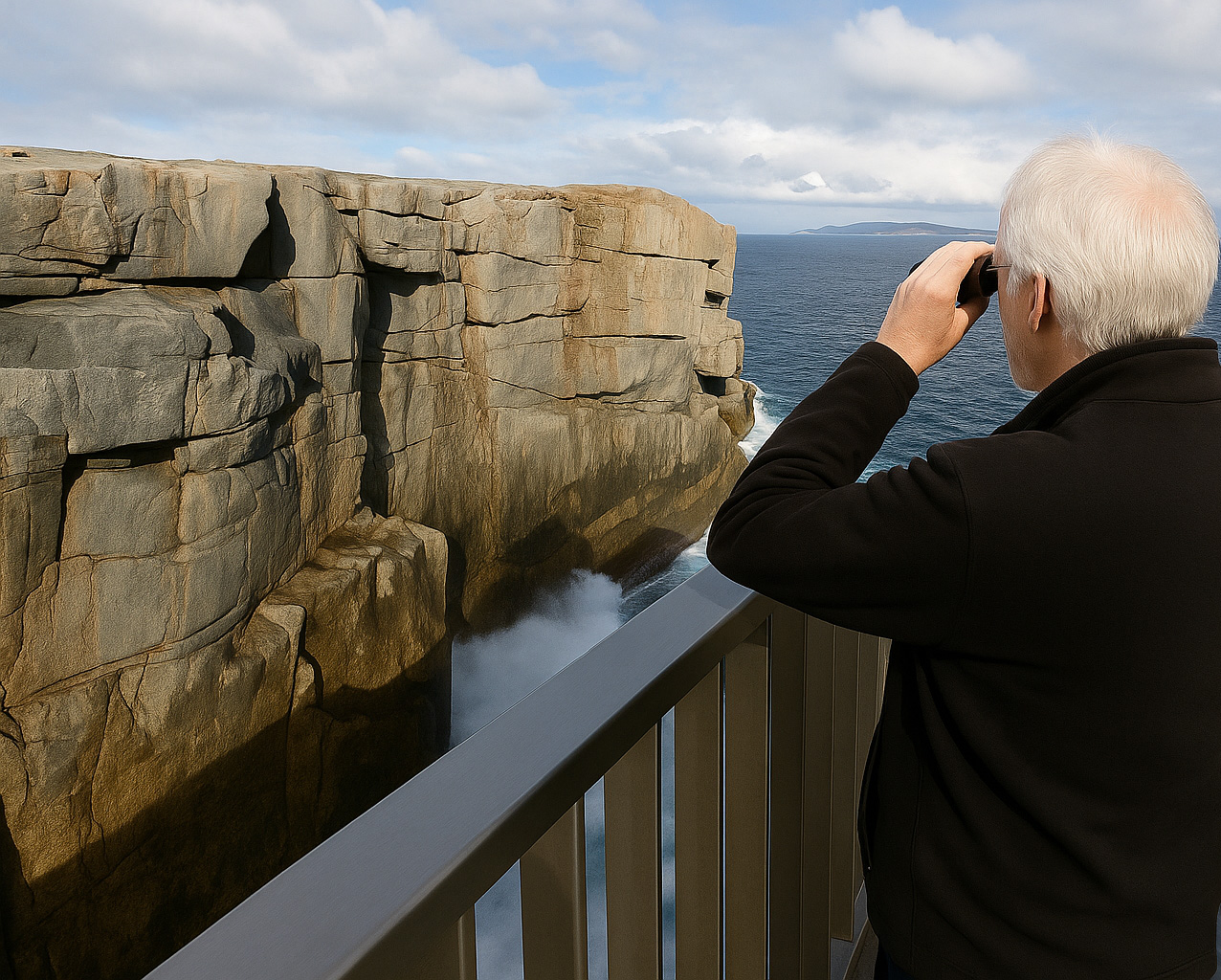
The artist scoping out his subject.
Inshaw, one suspects, spent hours, days, not sketching but listening — to wind, to crash, to silence. The result is an image that is not descriptive but diagnostic. He does not bring England with him; he strips it away. What remains is a painter in direct encounter with mortality — and with rock.
It is his most unsettling painting in years.
This piece of writing is a fictional homage to the writer cited. It is not authored by the actual author or their estate. No affiliation is implied. Also, the Apollo magazine reference is also fictional. It is not associated with the publication’s rights holders, or any real publication. No endorsement or affiliation is intended or implied.

An ongoing counterfactual art history project imagining what might have emerged had British painter David Inshaw spent extended periods working in Western Australia from the late 1990s to the late 2000s. While Inshaw never undertook such a journey, all visual and critical material in this series is crafted with respect to his real artistic style, interests, and biography. These reviews are fictional pastiches written in the spirit of critical engagement and creative speculation—not hoax or parody.
Leave A Comment